
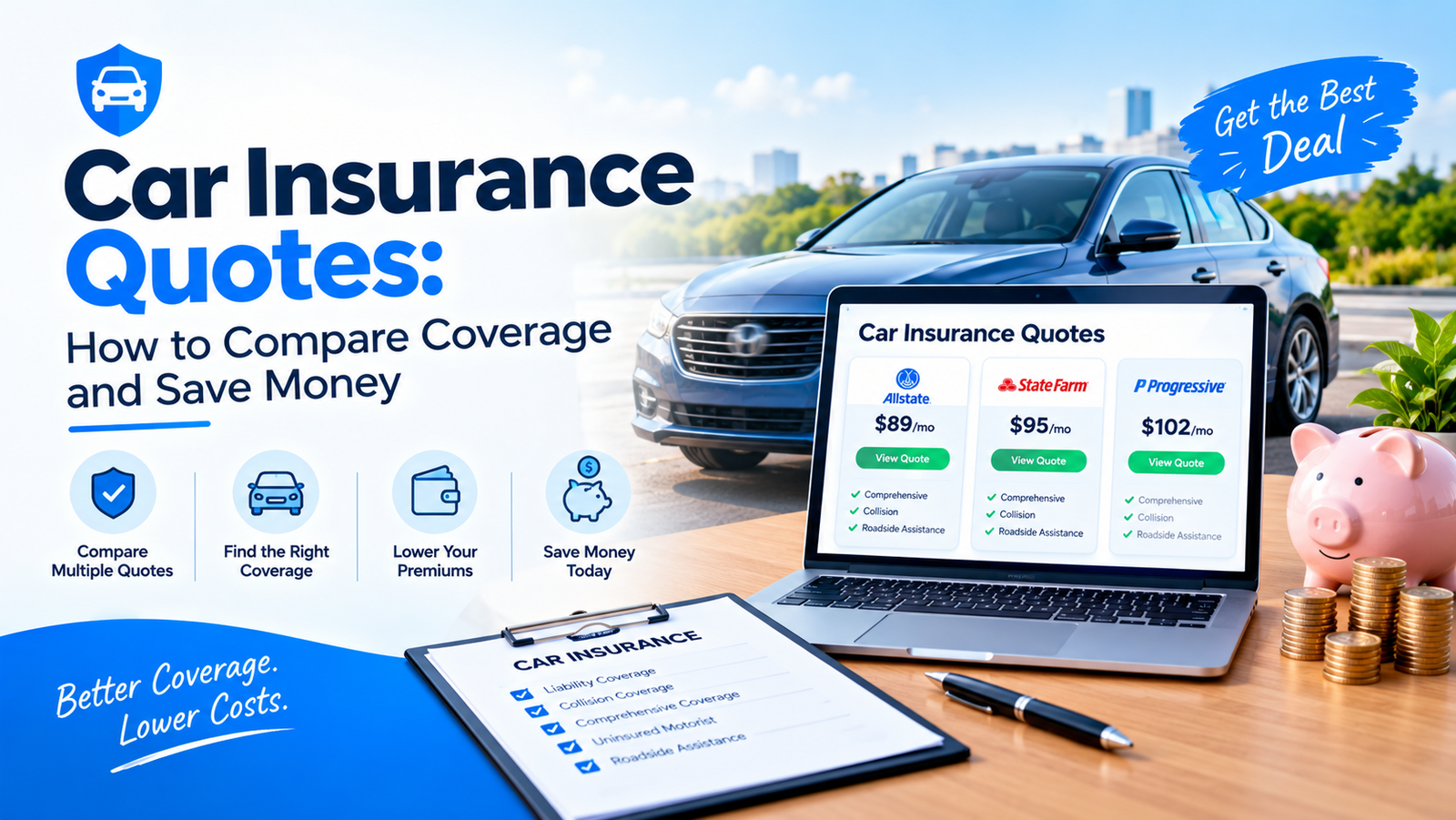
Car insurance quotes help you estimate how much you may pay for an auto insurance policy. Insurance companies use different factors to calculate your premium, so comparing multiple quotes can help you find coverage that fits your needs and budget.
The lowest price does not always provide the best protection. Before choosing a policy, review the coverage limits, deductibles, exclusions and available discounts.
What Are Car Insurance Quotes?
Car insurance quotes are estimated prices that insurance companies provide for auto insurance coverage.
An insurer may use the following information to calculate your quote:
- Your age
- Driving history
- Location
- Vehicle make and model
- Vehicle age
- Annual mileage
- Coverage type
- Deductible
- Credit-based insurance information where permitted
- Previous insurance history
Each company may evaluate these factors differently. As a result, two insurers may provide different prices for similar coverage.
How Do Car Insurance Quotes Work?
When you request a quote, the insurance company reviews your personal and vehicle information. It then estimates the level of risk associated with insuring you.
The insurer may ask for details such as:
- Your full name
- Address
- Date of birth
- Driver’s license information
- Vehicle identification number
- Vehicle use
- Average yearly mileage
- Accident history
- Traffic violations
- Current insurance coverage
The company uses this information to estimate your premium. Your final price may change if the insurer verifies different information after you apply.
Types of Car Insurance Coverage
Understanding the main types of coverage can help you compare quotes more effectively.
Liability Coverage
Liability coverage helps pay for injuries or property damage that you cause to another person while driving.
Many locations require drivers to carry a minimum amount of liability insurance. However, minimum limits may not provide enough protection after a serious accident.
Collision Coverage
Collision coverage helps pay for damage to your vehicle after a collision with another vehicle or object. This coverage usually applies regardless of who caused the accident, minus your deductible.
Comprehensive Coverage
Comprehensive coverage helps protect your vehicle from damage caused by events other than a collision. These events may include:
- Theft
- Vandalism
- Fire
- Falling objects
- Flooding
- Hail
- Animal damage
Uninsured and Under insured Motorist Coverage
This coverage may help pay for your injuries or vehicle damage if another driver causes an accident but has no insurance or insufficient coverage.
Medical Payments Coverage
Medical payments coverage may help pay medical expenses for you and your passengers after an accident, depending on your policy and location.
Personal Injury Protection
Personal Injury Protection, or PIP, may help cover medical expenses and certain other costs after an accident. Some locations require this coverage, while others do not.
How to Get Car Insurance Quotes
You can request car insurance quotes online, by phone or through an insurance agent.
Follow these steps:
Step 1: Gather Your Information
Prepare your driver’s license details, vehicle information, driving history and current policy information.
Step 2: Choose the Coverage You Need
Decide whether you need liability coverage only or additional protection such as collision and comprehensive coverage.
Step 3: Request Multiple Quotes
Contact several insurance companies and request quotes using the same coverage limits and deductibles.
Step 4: Compare the Details
Review more than the monthly premium. Compare deductibles, limits, exclusions, discounts and customer service options.
Step 5: Check the Policy Before Buying
Read the policy documents carefully. Confirm that the coverage matches the information you provided and the protection you want.
What Affects Car Insurance Quotes?
Insurance companies consider many factors when calculating premiums.
Driving Record
A history of accidents, speeding tickets or other violations may increase your premium. A clean driving record may help you qualify for lower rates.
Location
Your location can affect your quote because insurers consider traffic levels, accident rates, theft statistics and weather risks in your area.
Vehicle Type
Sports cars, luxury vehicles and vehicles with expensive replacement parts may cost more to insure. Safety features and anti-theft systems may help reduce the cost.
Age and Driving Experience
New drivers often pay higher premiums because they have less driving experience. Rates may change as drivers gain more experience.
Annual Mileage
People who drive fewer miles may qualify for lower rates because they spend less time on the road.
Coverage Limits
Higher coverage limits usually increase the premium, but they may provide stronger financial protection after an accident.
Deductible
A deductible is the amount you pay before your insurance covers an eligible claim. A higher deductible may lower your premium, but you will pay more out of pocket after a claim.
Credit-Based Insurance Information
In some locations, insurers may use credit-based insurance information when calculating premiums. Rules differ by location, and some places restrict or prohibit this practice.
How to Compare Car Insurance Quotes
Compare each quote using the same information and coverage levels. This makes it easier to identify the real price difference between insurers.
Review the following details:
- Liability limits
- Collision coverage
- Comprehensive coverage
- Deductible amounts
- Uninsured motorist coverage
- Medical coverage
- Roadside assistance
- Rental car coverage
- Policy exclusions
- Available discounts
- Payment options
A quote with a lower premium may include lower coverage limits or a higher deductible. Always compare similar policies before choosing the cheapest option.
Ways to Save Money on Car Insurance
You can often reduce your insurance cost by making practical changes.
Compare Different Companies
Request quotes from multiple insurers. Each company uses its own pricing model, so comparison shopping may reveal different rates.
Ask About Discounts
Insurance companies may offer discounts for:
- Safe driving
- Multiple vehicles
- Bundling home and auto insurance
- Completing a defensive driving course
- Installing anti-theft equipment
- Driving fewer miles
- Paying the premium in full
- Maintaining continuous insurance coverage
- Having certain safety features
Ask each insurer which discounts you may qualify for.
Choose a Suitable Deductible
A higher deductible may reduce your premium. However, choose an amount you can afford if you need to file a claim.
Maintain a Clean Driving Record
Avoiding accidents and traffic violations can help you qualify for better rates over time.
Review Your Policy Regularly
Your insurance needs may change when you move, buy a new vehicle, drive fewer miles or change your household. Review your coverage regularly to make sure it still fits your situation.
Consider Usage-Based Insurance
Some insurers offer programs that track driving behavior through a mobile app or device. Safe driving habits may help some drivers qualify for a discount.
Review the program’s privacy terms and pricing conditions before enrolling.
Common Mistakes When Comparing Car Insurance Quotes
Choosing the Cheapest Quote Automatically
The lowest price may provide less coverage or include a higher deductible. Review the policy details before making a decision.
Using Different Coverage Levels
If one quote includes higher liability limits than another, the prices will not provide a fair comparison. Use the same limits for every quote.
Hiding Driving Information
Provide accurate information about your driving history, vehicle use and location. Incorrect information may delay a claim or affect your coverage.
Ignoring Deductibles
A low premium may come with a high deductible. Confirm how much you would need to pay after a covered claim.
Forgetting to Ask About Exclusions
Every policy has exclusions. Read the policy documents and ask the insurer about situations that the policy does not cover.
Failing to Update Your Information
Changes to your address, vehicle use, drivers or vehicle ownership may affect your policy. Notify your insurer when important details change.
Proportion Calculator: Solve Ratios Quickly and Easily
Read More: Car Insurance Quotes: How to Compare Coverage and Save MoneyHow Often Should You Compare Car Insurance Quotes?
Many drivers compare quotes once a year or when their policy renews. You may also want to compare insurance when:
- You buy a different vehicle
- You move to a new location
- You add or remove a driver
- You get married
- Your driving record changes
- You drive fewer miles
- Your current premium increases
- You want different coverage
Regular comparisons can help you understand whether your current policy remains competitive.
Are Online Car Insurance Quotes Accurate?
Online quotes can provide a useful estimate, but the final price may change after the insurer verifies your information.
The quote may change because of:
- Differences in driving records
- Incorrect vehicle information
- Address verification
- Changes in coverage selections
- Updated claims information
- Missing policy details
Review the final policy documents carefully before purchasing coverage.
Frequently Asked Questions About Car Insurance Quotes
How many car insurance quotes should I get?
Requesting quotes from several insurers can help you compare prices and coverage. Use the same information and coverage limits for each quote.
Do car insurance quotes affect my credit score?
Requesting a quote typically does not have the same effect as applying for a traditional loan. However, insurance companies may use credit-based insurance information where permitted. Ask the insurer how it handles credit information.
Why do different companies offer different prices?
Each insurance company uses its own rating system, risk factors and discounts. This explains why prices can vary between insurers.
Can I get a car insurance quote without buying a policy?
Yes. You can usually request a quote without purchasing coverage. Confirm the insurer’s privacy policy before submitting your information.
Should I choose the highest coverage limit?
The right coverage limit depends on your financial situation, vehicle and local requirements. Higher limits may provide more protection but often cost more.
Does a higher deductible lower my premium?
A higher deductible may lower your premium. However, you will need to pay more out of pocket after a covered claim.
Can I change my car insurance policy later?
Many insurers allow policy changes during the coverage period. Contact the insurer before making changes so you understand how they affect your premium and protection.
Essential BMI Calculator: Calculate Your Body Mass Index
Read More: Car Insurance Quotes: How to Compare Coverage and Save MoneyFinal Thoughts
Car insurance quotes help you compare the cost and protection offered by different insurers. To make a fair comparison, use the same coverage limits, deductibles and vehicle information for every quote.
Do not focus only on the lowest price. Review the policy terms, exclusions, customer service options and financial protection before choosing coverage.
By comparing regularly, asking about discounts and selecting suitable coverage, you can find a policy that meets your needs and budget.